Rainwater filters – how to make rainwater safe to drink
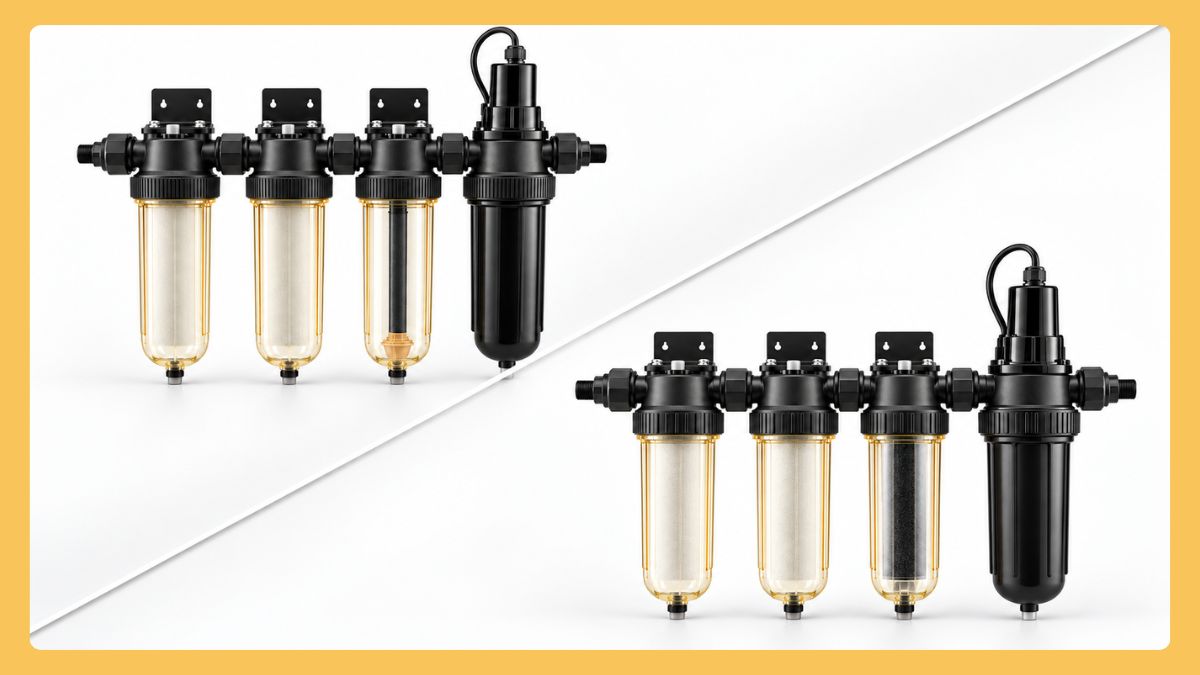
Collecting and using rainwater is a smart and sustainable way to make the most of natural resources. However, proper water treatment is essential for clean, sanitary water. Rainwater can contain everything from sand, dirt, and organic matter to bacteria, viruses, and other microorganisms.
With a rainwater filtration system, you can effectively treat water through multiple filtration stages. The most common solutions are three-stage filtration or four-stage filtration for more thorough water treatment. Both systems combine mechanical filtration, activated carbon, and UV treatment to improve water quality.
An effective three-stage system can treat up to 2,000 liters of water per hour and is designed to remove particles, reduce organic matter, and inactivate microorganisms.
Why do you need a rainwater filter?
Rainwater may look clean and clear, but that doesn't mean it's free from contaminants. When rainwater is collected from surfaces such as roofs and directed into a rainwater storage tank, dirt, pollen, leaves, bird droppings, and other contaminants can enter the water.
With the right water treatment system, you can:
- Filter out sand, soil, rust, and other particles.
- Reduce humic substances and organic matter.
- Improve the taste, odor, and color of the water.
- Reduce certain chemical contaminants.
- Inactivate bacteria, viruses, and other microorganisms using UV light.
- Achieve more reliable water quality for household needs.
Three-stage filtration or four filtration stages?
For effective rainwater treatment, three-stage and four-stage filtration systems are two popular options. Both combine particle filtration, activated carbon, and UV treatment to remove dirt, reduce organic matter, and inactivate bacteria and other microorganisms.
Three-stage filtration – effective and convenient water treatment
Three-stage filtration is ideal for anyone looking for a complete, low-maintenance rainwater filtration system. The system can treat up to 2,000 liters of water per hour and consists of three treatment stages:
- 1. Cyclone filter: Removes sand, rust, dirt, and particles using cyclone technology and filter media.
- 2. Activated carbon filter: Reduces humic substances, organic matter, and unwanted tastes, odors, and discoloration.
- 3. 25 W UV filter: Inactivates bacteria, viruses, and other microorganisms without adding chemicals.
Three-stage filtration is an excellent option for homes and vacation properties that need effective water treatment.
Four filtration stages – for more thorough water treatment
For those who want more comprehensive filtration, a four-stage system provides an additional level of particle removal. The filtration process is divided into coarse and fine filtration to better protect the carbon and UV filters.
- 1. 100-micron coarse filter: Captures larger particles such as sand, soil, and rust.
- 2. 25-micron fine filter: Removes smaller particles and improves water clarity.
- 3. Activated carbon filter: Reduces humic substances, organic compounds, odors, unpleasant tastes, and certain chemical contaminants.
- 4. 25 W UV filter: Inactivates bacteria, viruses, and other microorganisms using UV light.
Four-stage filtration is particularly suitable for rainwater with varying water quality or higher particle concentrations.
Comparison – three-stage and four-stage filtration
| Feature | Three-stage filtration | Four-stage filtration |
|---|---|---|
| Number of treatment stages | 3 | 4 |
| Particle filtration | 1 cyclone filter | 2 cyclone filters |
| Coarse and fine filtration | Combined | Separate stages |
| Activated carbon filter | ✓ | ✓ |
| 25 W UV treatment | ✓ | ✓ |
| Reduces humic substances and odors | ✓ | ✓ |
| Inactivates microorganisms | ✓ | ✓ |
| Water treatment capacity | Up to 2,000 L/hour | High capacity – see product specifications |
| Main advantage | Effective, complete water treatment in three stages | More thorough treatment with separate coarse and fine filters |
| Best suited for | Rainwater, well water, and lake water | Rainwater, well water, and lake water requiring additional particle filtration |
Which rainwater filter should you choose?
Three-stage filtration is a good choice if you're looking for effective, affordable, and low-maintenance water treatment with high capacity.
Four-stage filtration is recommended when you want more thorough particle filtration and better protection for the following treatment stages.
Both options provide effective rainwater treatment and are suitable for households with private water supplies. If the rainwater will be used for drinking, water quality must be verified through testing, since these systems do not remove every type of contaminant.