Collect rainwater from a downpipe – how to do it
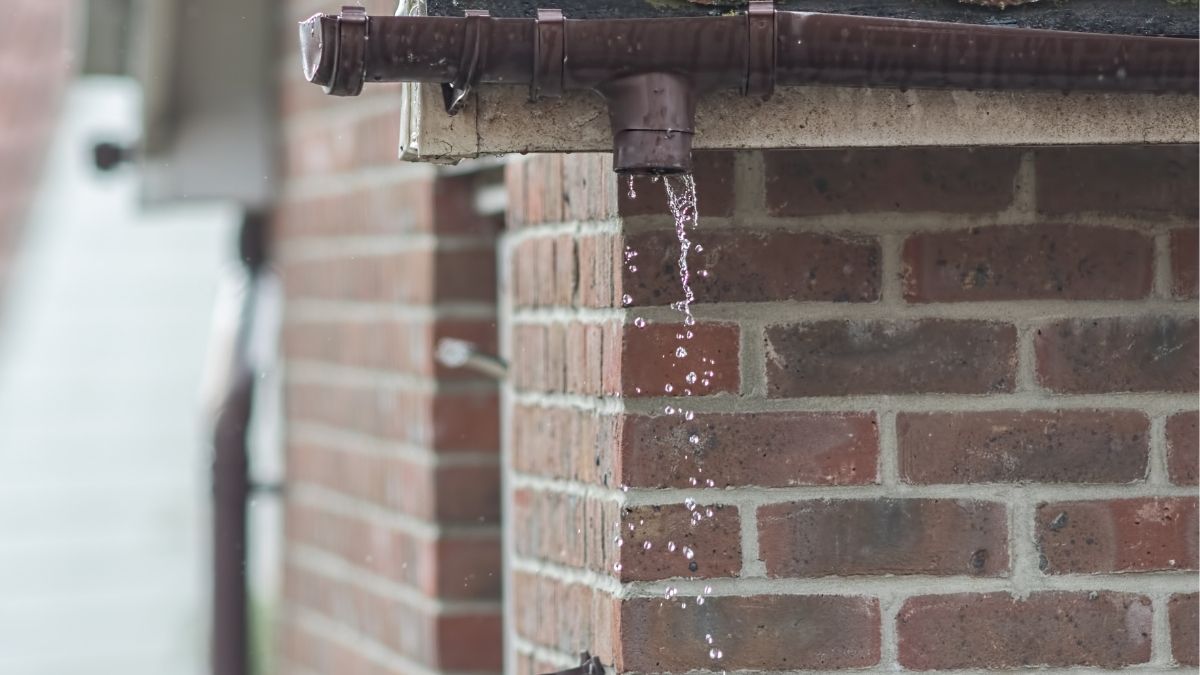
Collecting rainwater directly from a downpipe is a simple way to make use of water from your roof. With a rain barrel, the right connection and a simple filter, you can use the rainwater for purposes such as watering your garden.
Collecting rainwater from a downpipe is one of the easiest ways to start using rainwater at home. Instead of allowing all the water from the roof to continue into the stormwater system or the ground, part of the flow can be directed into a rain barrel or rainwater tank.
For a typical house, the system does not need to be particularly advanced. The most important thing is that the water can be directed from the downpipe in a controlled way and that there is a solution for excess water when the container becomes full.
How collection from a downpipe works
When it rains, water collects on the roof and is carried through the gutters to the downpipe.
By installing a rainwater diverter on the downpipe, part of the water can be directed into a storage container.
A simple system usually consists of:
- downpipe
- rainwater diverter
- hose or connection
- rain barrel or tank
- filter or leaf separator
- a way to manage excess water
When the container is full, the system should allow the remaining water to continue through the downpipe or be diverted safely elsewhere.
Which downpipe should you use?
If the house has several downpipes, it can be useful to choose the one that receives water from as large a section of the roof as possible.
The larger the roof area connected to the downpipe, the more rainwater can potentially be collected.
It is therefore useful to consider:
- how much roof area drains into the downpipe
- where there is space for a barrel or tank
- how easy the container is to access
- where excess water will go
The location should also make it easy to use the collected water where it is needed.
How much water comes from the downpipe?
The amount mainly depends on the roof area and how much rain falls.
One millimetre of rain on one square metre corresponds to approximately one litre of water.
If 50 m² of roof area drains into one downpipe and 10 mm of rain falls, that represents approximately 500 litres of rain on that roof area.
In practice, not all of the water can be collected. Some is lost through splashing, evaporation and because the roofing material retains a certain amount of water.
The roofing material therefore affects how much water actually reaches the downpipe and can be collected.
Use a rainwater diverter
A rainwater diverter is installed directly on the downpipe and directs part of the water into the storage container.
Different models are available, but the principle is the same: when it rains, water is taken from the downpipe through a connection and directed into the barrel or tank.
A practical option is a diverter that automatically allows water to continue down the downpipe when the container is full.
This reduces the risk of water overflowing from the barrel.
Filter out leaves and debris
Rainwater from the roof can contain leaves, needles, moss and other debris.
A filter or leaf separator helps reduce the amount of debris entering the container.
This makes the water easier to use and reduces the need for cleaning.
It is also a good idea to check gutters and filters regularly so that the water can flow freely.
Position the rain barrel correctly
A full rain barrel can become very heavy.
The container should therefore stand on a stable and level surface.
If you want to fill a watering can from a tap at the bottom of the barrel, it can be practical to raise the container slightly, provided that the base remains stable.
The container should also be covered to reduce the amount of debris and light entering it.
What happens when the barrel is full?
This is an important part of the installation.
During heavy rain, a smaller barrel can fill very quickly. Once it is full, excess water must be able to drain away.
A good solution is to use a rainwater diverter that allows the continuing flow to return to the downpipe.
Alternatively, the container can have a separate overflow outlet.
Excess water should not be directed in a way that creates problems around the foundations of the house or on neighbouring land.
What size should the rain barrel be?
That depends on how much water comes from the roof and what you intend to use the water for.
A smaller barrel can work well for a few flower beds or raised beds, while a larger roof area may fill a small container during a single rainfall event.
If you regularly receive more water than the container can hold, a larger tank or several connected containers may be an option.
It is therefore sensible to first estimate how much rainwater your own roof can provide.
What can the water be used for?
Rainwater collected from a downpipe is often used outdoors.
Common uses include:
- watering flowers and garden beds
- vegetable growing
- greenhouses
- lawns
- cleaning garden tools
- other outdoor purposes where drinking water is not required
More advanced use inside a building requires other types of installations and consideration of technical requirements and local regulations.
Start by calculating your roof
Before choosing the size of a barrel or tank, it can be useful to find out how much water can actually come from your roof.
The size of the roof, the roofing material and the rainfall where the property is located all affect the result.
With a rainwater calculation, you can estimate how many litres could potentially be collected during a year and how the amount varies between the months.
This gives you a better basis for choosing a solution that suits your property.